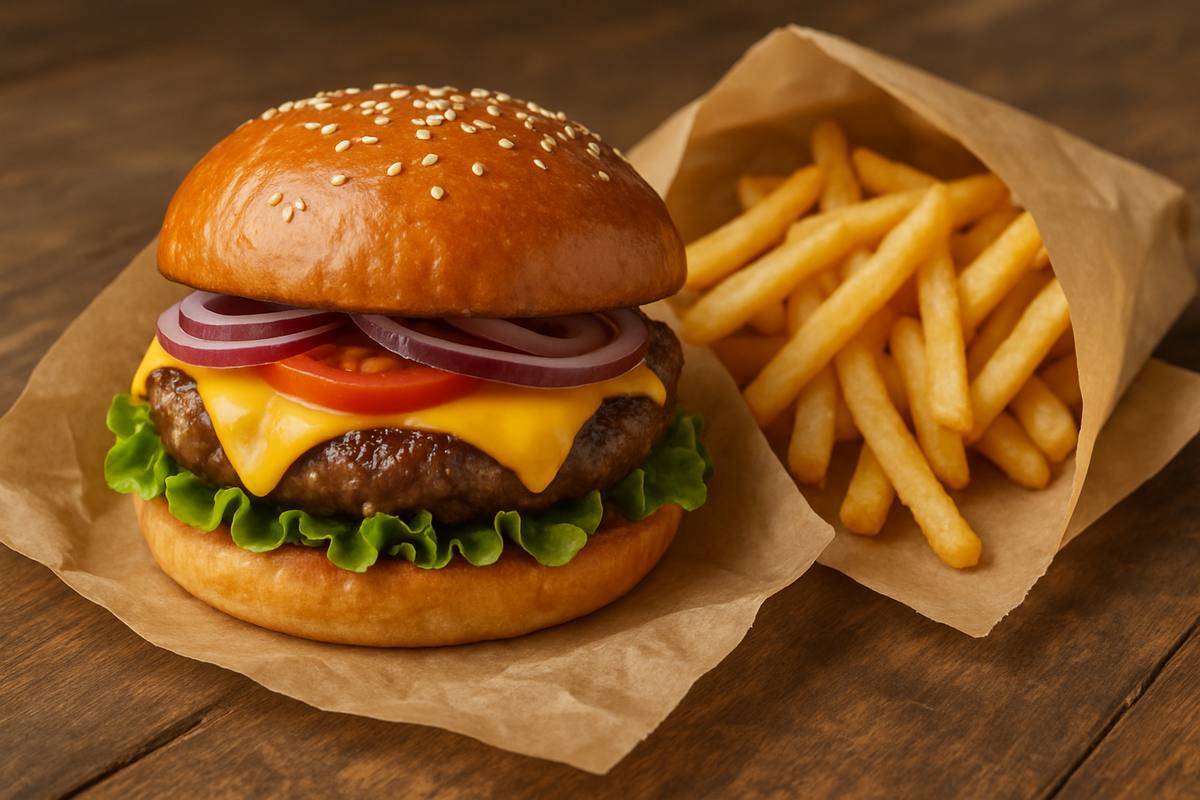
How grease resistance is measured
The industry standard is the Kit test (TAPPI T559) — a scale from 1 to 12, where a higher number means better oil/grease resistance. Quick-service wraps and bags typically need a mid-to-high Kit level depending on the food (a buttery pastry demands more than a dry sandwich). Water resistance (cobb test) and, for some uses, oxygen barrier may also matter. Whatever replaces PFAS has to hit your required Kit level — so always confirm test data on your actual paper.
What to specify
- Kit level (grease/oil resistance) needed for your product
- Water resistance if required
- Recyclable or compostable? — this rules options in or out
- PFAS-free proof — a total-organic-fluorine (TOF) test
- Food-contact documentation (FDA / EU)
The coating options
- Bio-based / nanocellulose coating — PFAS-free, can be plastic-free and compostable, gives grease + water (and oxygen) barrier.
- Wax / silicone — cheap and grease resistant, but wax limits recyclability and not compostable in the same way.
- Dispersion / acrylic coatings — scalable, but often contain plastic, so they may fail compost certification.
- PVOH — good barrier but water-sensitive.
For the full comparison of PFAS alternatives, see what replaces PFAS in food packaging.
Recyclable vs compostable — pick before you buy
A "PFAS-free" claim is not the same as "compostable." Many PFAS-free coatings still contain plastic, so the paper is at best recyclable, not compostable. If your brand needs a compostable claim (for EU PPWR or a sustainability pledge), you need a fully bio-based, plastic-free coating — and the compostability certification (EN13432 / BPI) to back it. This is where bio-based nanocellulose coatings have an edge.
How to switch — practical steps
- Define your required Kit level and whether you need recyclable or compostable.
- Get samples and trial the coating on your own paper/line.
- Run grease (Kit), water, and PFAS (TOF) tests on the coated paper.
- Confirm food-contact documentation and, if needed, compostability certification status.
- Scale up with the coating supplied in bulk.
Switch your greaseproof off PFAS
Request our coating-liquid sample and test data — trial it on your own paper line.
Request a sample →Request a sample & technical data
Tell us your application — a real person replies within 1–2 business days.
Frequently asked questions
What is PFAS-free greaseproof paper?
It is grease-resistant paper made without per- and polyfluoroalkyl substances (PFAS). Grease resistance comes instead from bio-based, wax, silicone, PVOH or dispersion coatings. Bio-based nanocellulose coatings can also be plastic-free and compostable.
How is grease resistance measured?
By the Kit test (TAPPI T559), a 1–12 scale where higher means better oil/grease resistance. Specify the Kit level your product needs and confirm it on your actual coated paper.
Is PFAS-free the same as compostable?
No. Many PFAS-free coatings still contain plastic and are only recyclable. For a compostable claim you need a fully bio-based, plastic-free coating plus compostability certification (EN13432 / BPI).
※ General technical information on greaseproof paper. ZnoNova Biopack figures are tested values; "compostable / PFAS-free" claims are supported by testing/certification available or in progress — confirm current status before on-pack claims.